You have no items in your shopping cart.
If you are choosing a new stove, one of the first technical questions that affects cost, layout and compliance is chimney liner vs twin wall. The right answer depends less on the stove itself and more on the route the flue needs to take, the condition of the property, and whether you already have a usable masonry chimney.
This is where many installations either become straightforward or unexpectedly complicated. Two homes can have the same appliance in mind, but one may only need a flexible liner dropped into an existing chimney, while the other needs a complete insulated flue system built from the stove upwards. Knowing the difference early helps you budget properly and avoid design choices that look simple on paper but do not suit the house.
Chimney liner vs twin wall - the basic difference
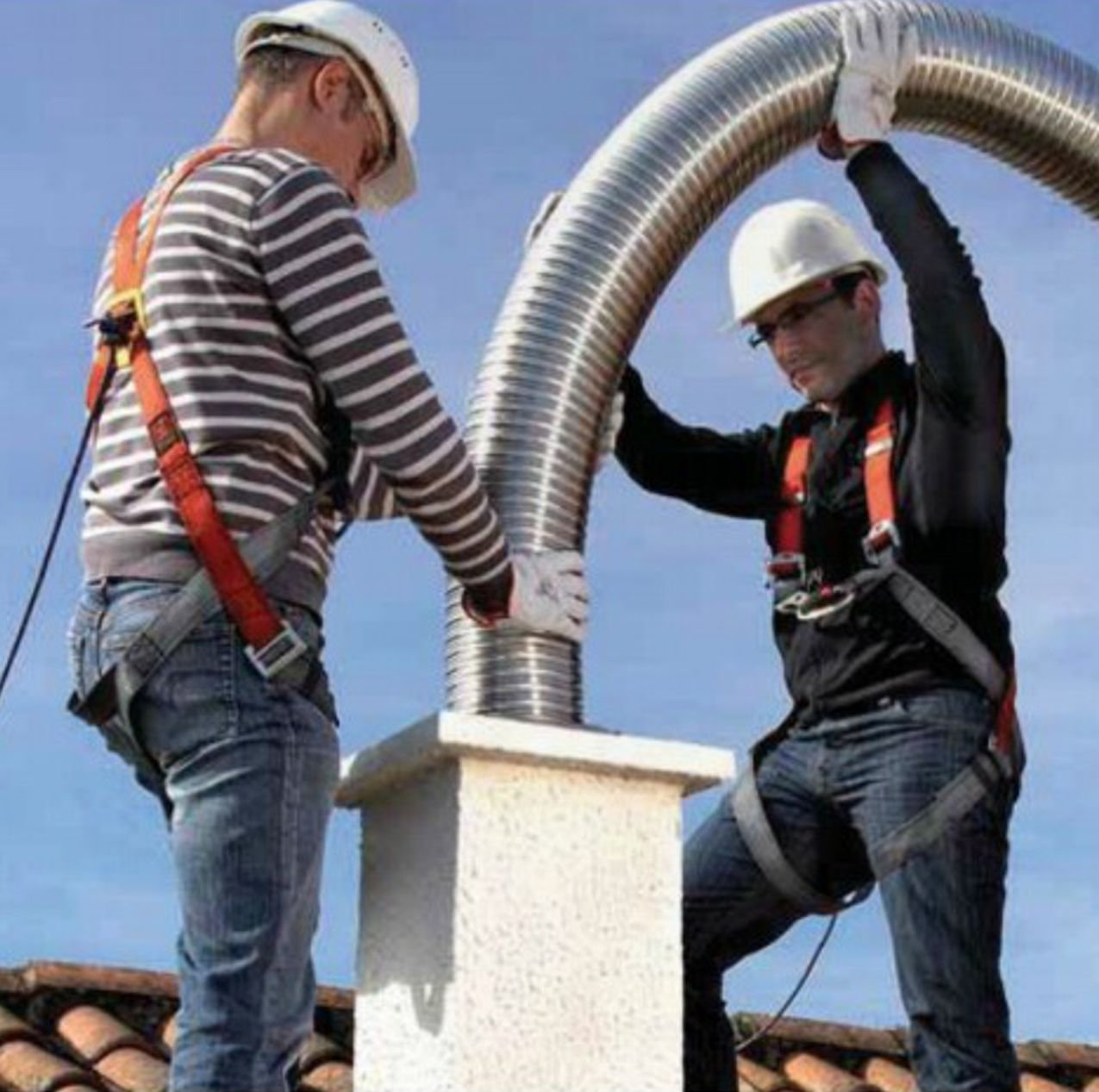
A chimney liner is usually installed inside an existing masonry chimney. In most stove projects, this means a flexible stainless steel liner is fed down through a brick chimney stack and connected to the stove below. It uses the chimney structure that is already there, with the liner creating a correctly sized and safer flue passage for the appliance.
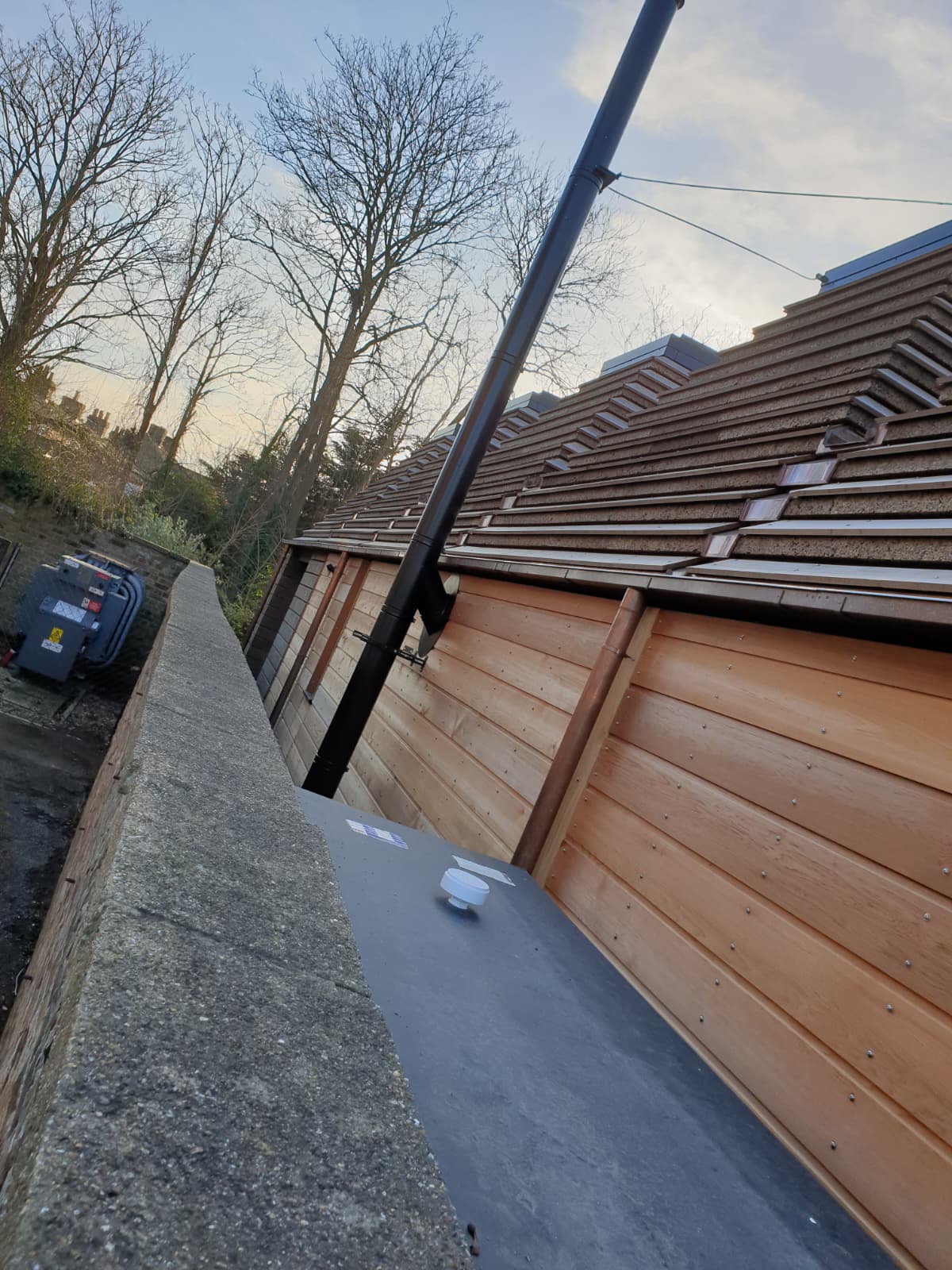
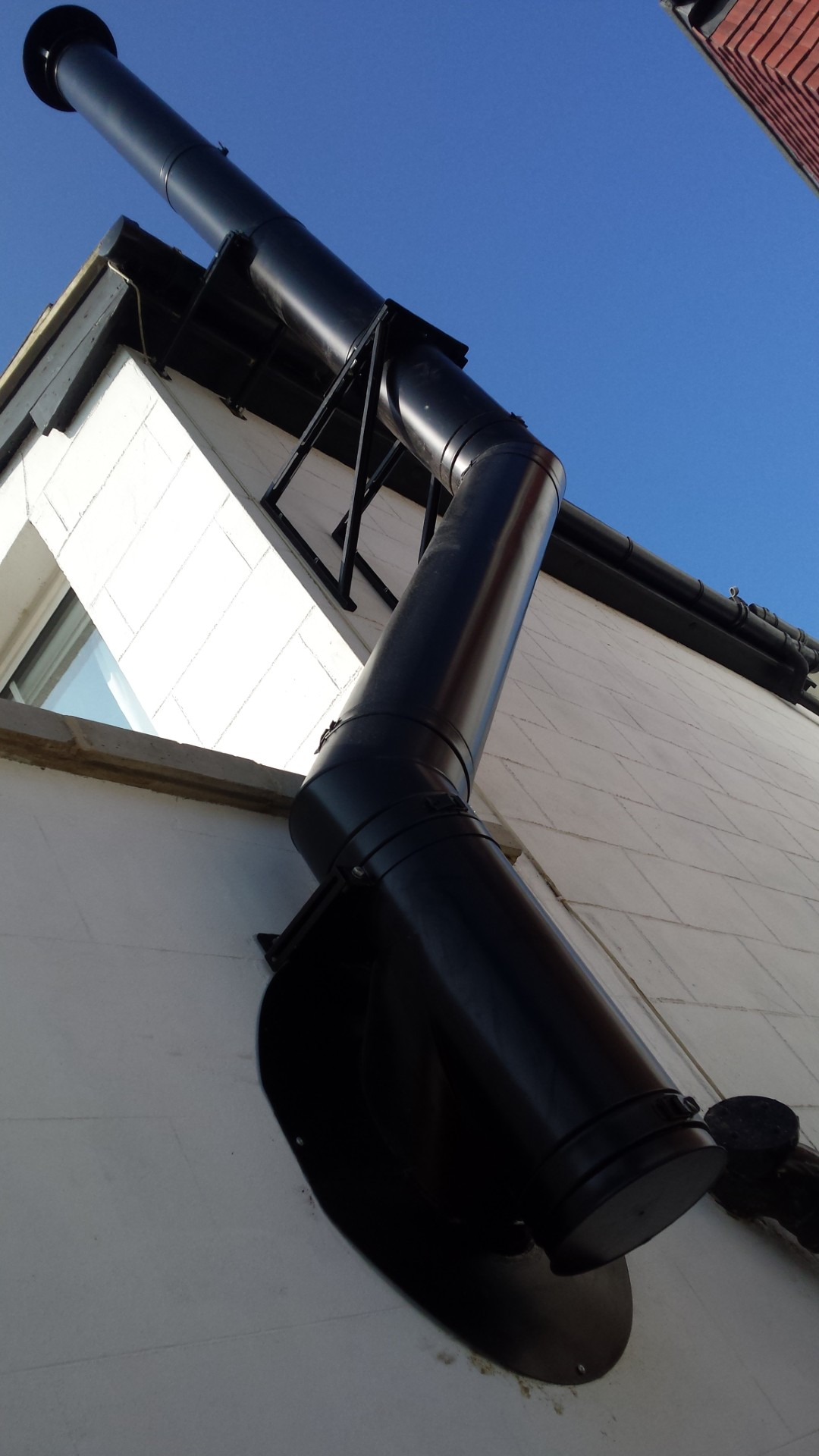
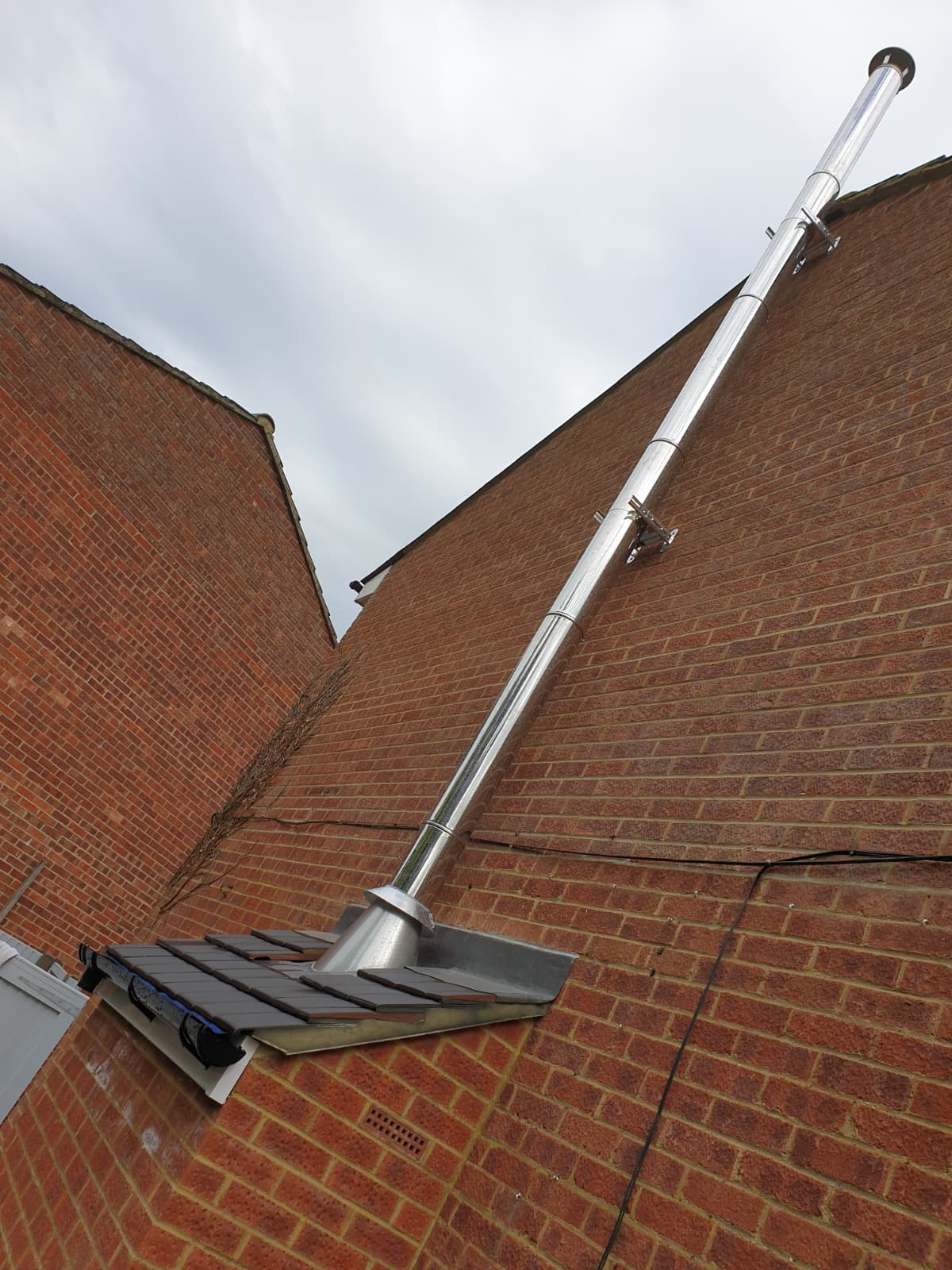
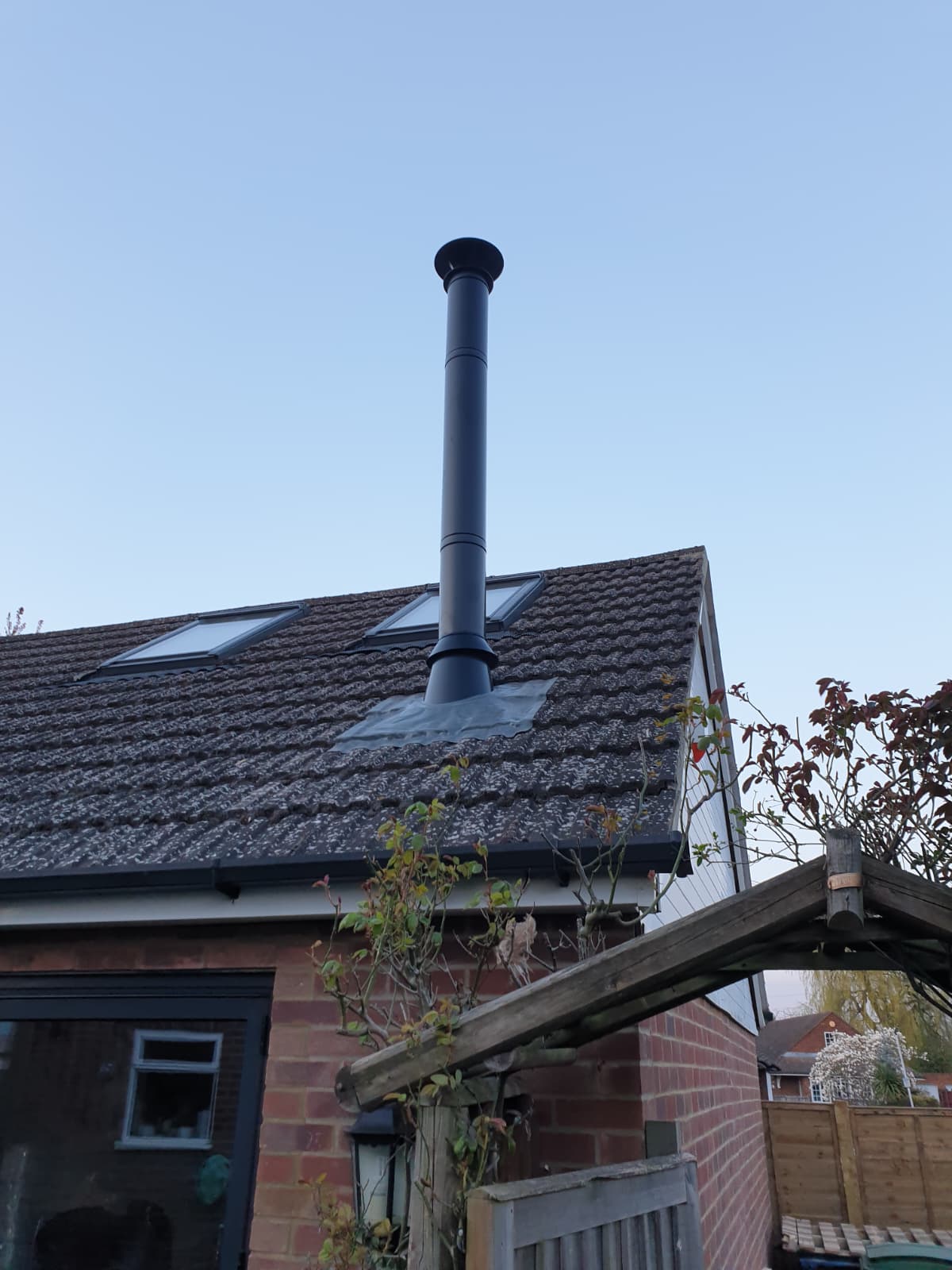
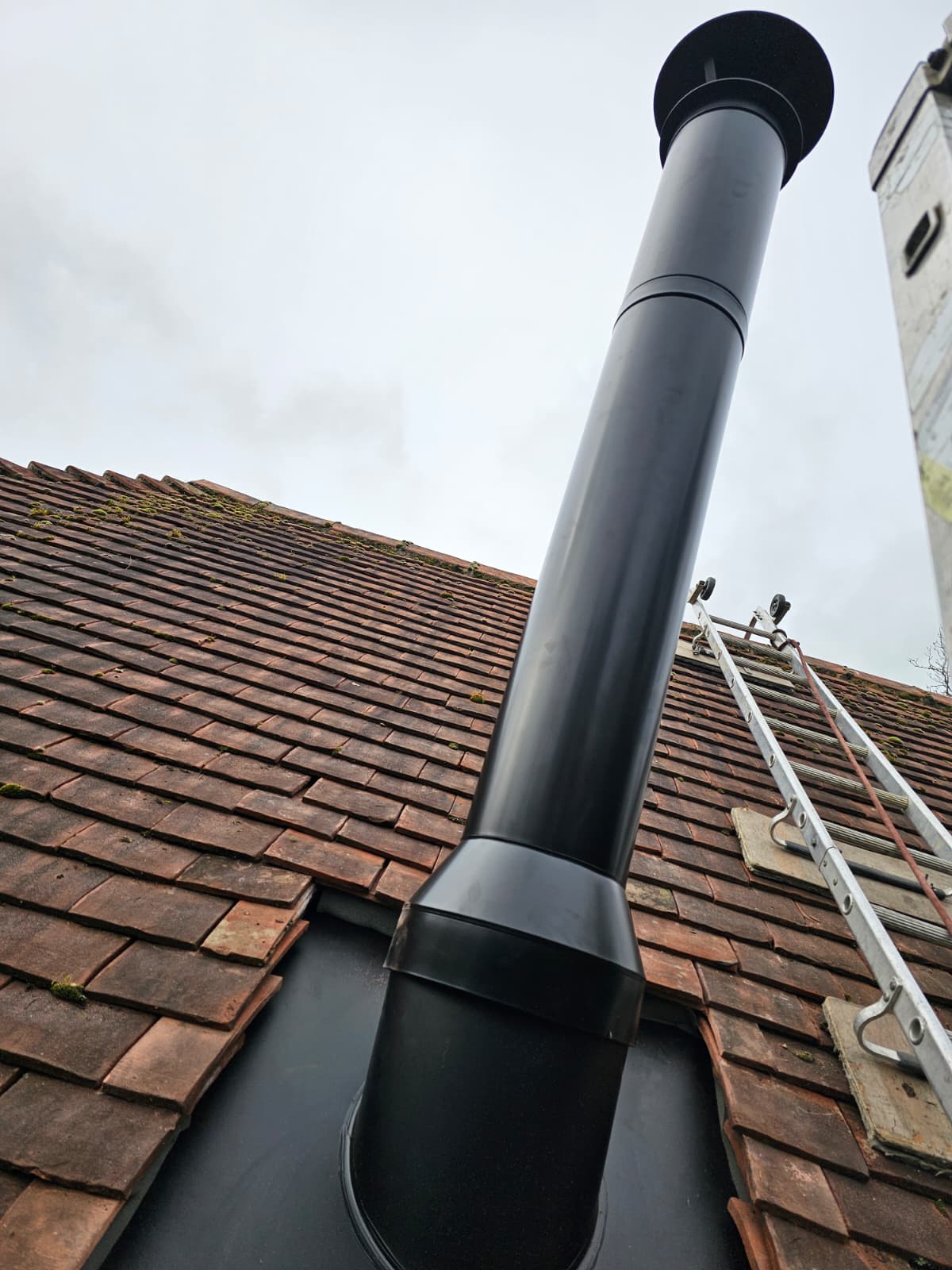
Twin wall is different. It is a factory-made insulated flue system, built from rigid sections that connect together. Rather than relying on a brick chimney, it creates a new flue route where no suitable chimney exists. It can run internally through floors and the roof, or externally up an outside wall, depending on the property and layout.
So the simplest way to think about it is this: a chimney liner upgrades an existing chimney, while twin wall creates a new insulated chimney system.
When a chimney liner is usually the right option
If your home already has a sound masonry chimney, a liner is often the most practical and cost-effective route. Older chimneys are rarely ideal for modern stoves in their original state. They may be oversized, rough internally, affected by age, or unsuitable for the flue gas temperatures and performance of a wood burning appliance. A correctly specified liner helps the stove draw properly and supports a compliant installation.
For many period and traditional homes, this is the neatest answer because the visible character of the fireplace remains intact. Most of the flue system is hidden within the existing stack, so the finished look is clean and familiar.
That said, an existing chimney does not automatically mean a liner is possible. The flue path must be suitable, the chimney must be structurally sound, and access needs to be workable. If the flue is badly damaged, heavily offset, or compromised in a way that cannot safely take a liner, other solutions may need to be considered.
When twin wall makes more sense
Twin wall is usually chosen when there is no chimney to line. This is common in newer houses, extensions, garden rooms and rooms where the original fireplace has long since been removed. It is also useful when the desired stove position does not align well with the existing chimney breast.
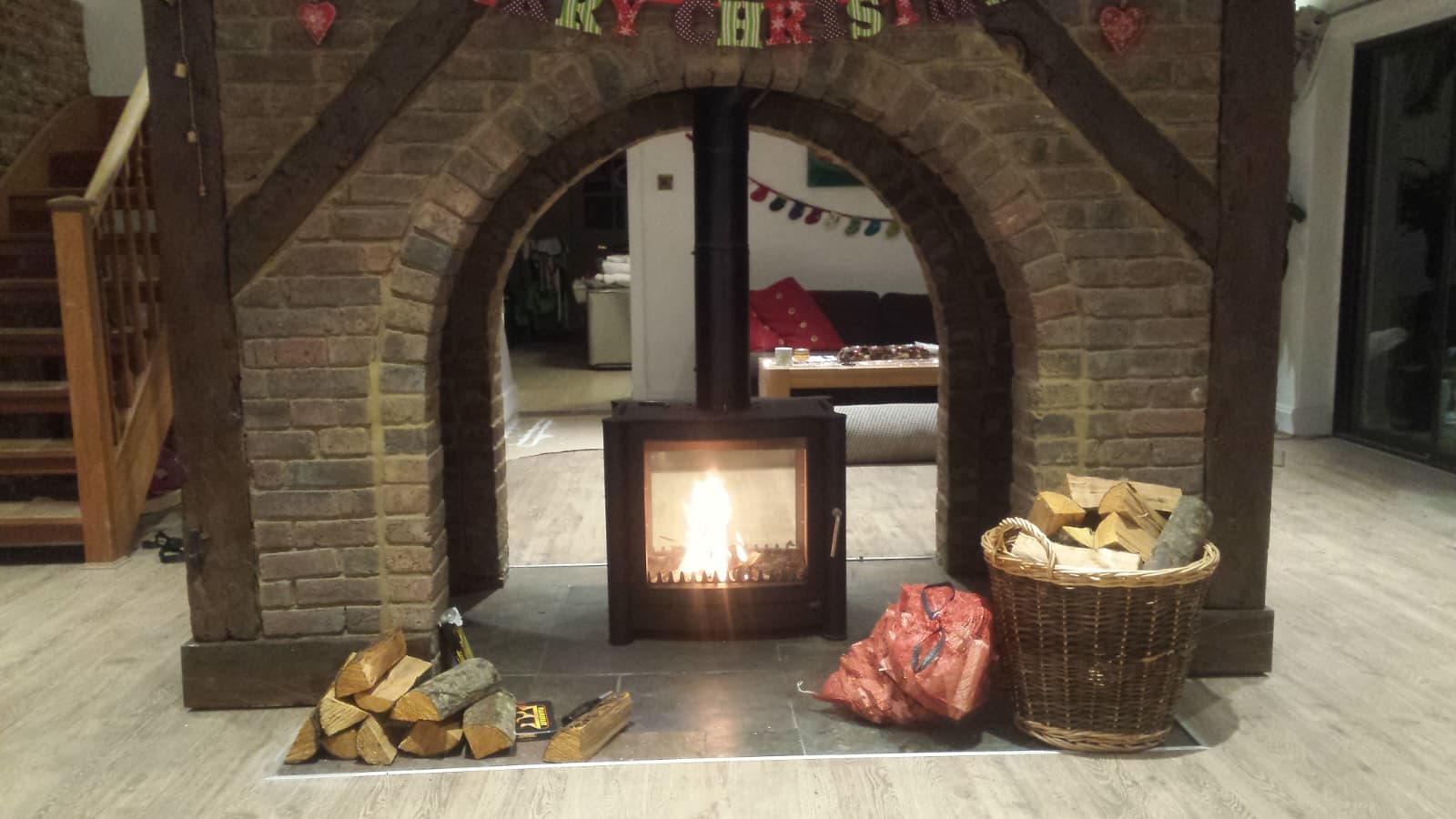
Because twin wall is a complete insulated system, it gives far more flexibility in where a stove can go. You are not tied to a traditional fireplace opening. In some homes, that opens up much better room layouts and allows the appliance to be positioned where it will heat the space more effectively.
Twin wall is also sometimes the best option in renovation projects where building work has changed the original chimney arrangement. Even where a chimney exists somewhere in the property, it may not be the right one for the chosen room or appliance.
Cost differences and what affects them
Homeowners often assume a liner is always much cheaper than twin wall. Often it is, but not in every case.
A standard chimney liner installation can be more economical because the brick chimney is already doing much of the structural work. However, costs still depend on height, access, terminal requirements, register plates, cowl selection, the stove connection, and whether remedial work is needed to the chimney or fireplace chamber.
Twin wall usually costs more in materials because you are building an insulated flue system from scratch. The route also matters. A straight run is simpler than one needing offsets, supports, wall brackets, floor penetration components or a long external rise above the roofline.
The important point is that the cheapest-looking option at first glance is not always the right long-term value. A properly designed flue system gives better performance, easier maintenance and a safer result. A fixed quotation after a site survey is far more useful than broad online price comparisons.
Performance, draw and stove efficiency
Good flue performance is essential for any stove. If the flue does not draw correctly, the appliance will never work as it should. You may see poor combustion, difficulty lighting, smoke issues, or excessive soot and tar deposits.
A suitable liner within a chimney can improve draw by giving the stove a flue of the right diameter and a smoother internal path than an older brick flue. This often helps modern wood burning stoves perform more consistently and burn more cleanly.
Twin wall performs well too, especially because it is insulated. Keeping flue gases warmer supports draw and can reduce condensation within the system. That insulation is one reason twin wall is such an effective solution where no chimney exists. It is designed specifically to maintain safe distances to combustibles and stable flue temperatures when installed correctly.
Neither system is automatically better in all cases. The better option is the one that suits the property, the appliance and the route.
Appearance inside and outside the home
This is one of the biggest practical trade-offs. A chimney liner is mostly hidden, which appeals to homeowners who want a traditional fireplace setting without visible flue sections beyond the stove connection.
Twin wall can look excellent, but it is more visibly part of the installation. Internally, that can be a feature in the right room, especially with a freestanding stove and a simple hearth. Externally, some properties suit an outside twin wall system very well, while others need more thought to ensure the finished look is in keeping with the house.
This is particularly relevant in areas with a strong mix of period homes and more modern extensions. What works beautifully in one property can look intrusive in another. The best installations consider both compliance and visual balance.
Installation complexity and building regulations
Both systems need to be specified and fitted correctly. This is not simply a matter of connecting pipes together. Flue diameter, route length, offsets, termination height, distance from combustible materials, access for sweeping, appliance output and ventilation all affect the final design.
With a liner, installers need to confirm the condition and suitability of the chimney, the correct grade of liner, and the proper way to connect and support the system. With twin wall, the route must be carefully designed so that every component, clearance and support point meets regulations and manufacturer requirements.
In the UK, stove and flue installations should comply with Building Regulations, and using a HETAS-registered installer helps ensure the work is carried out and signed off correctly. That matters not only for safety, but also for insurance, future property sales and long-term peace of mind.
Which should you choose?
If you have a usable masonry chimney in the right place, a chimney liner is often the sensible solution. It tends to preserve the character of the room, makes use of the structure already in place and can offer a cost-effective route to a compliant stove installation.
If you do not have a suitable chimney, or the stove would work better in a different position, twin wall is usually the answer. It offers flexibility and reliable performance, but it needs careful design to keep the installation efficient, safe and visually well judged.
There are also grey areas. Some homeowners begin by assuming their old chimney can be lined, only to find that its condition or route makes that unrealistic. Others expect twin wall to look too industrial, then see a well-planned installation and prefer the cleaner stove positioning it allows.
That is why a proper site survey matters. At Windsor and Eton Stoves, this is often where uncertainty becomes much clearer. Once the property, chimney condition and proposed appliance are assessed together, the right flue system usually becomes obvious.
A stove should feel like a lasting improvement to your home, not a compromise built around guesswork. If you are weighing up chimney liner vs twin wall, the best next step is to look at the house as a whole - the fireplace, the flue route, the finish you want, and the standard of installation needed to enjoy it safely for years to come.