
Discovery and survey
Chris visits the property, measures the space and the existing fireplace opening if any, discusses your reference images and the room's role in the house. Photos of the whole room, not just the fireplace, feed into the design.
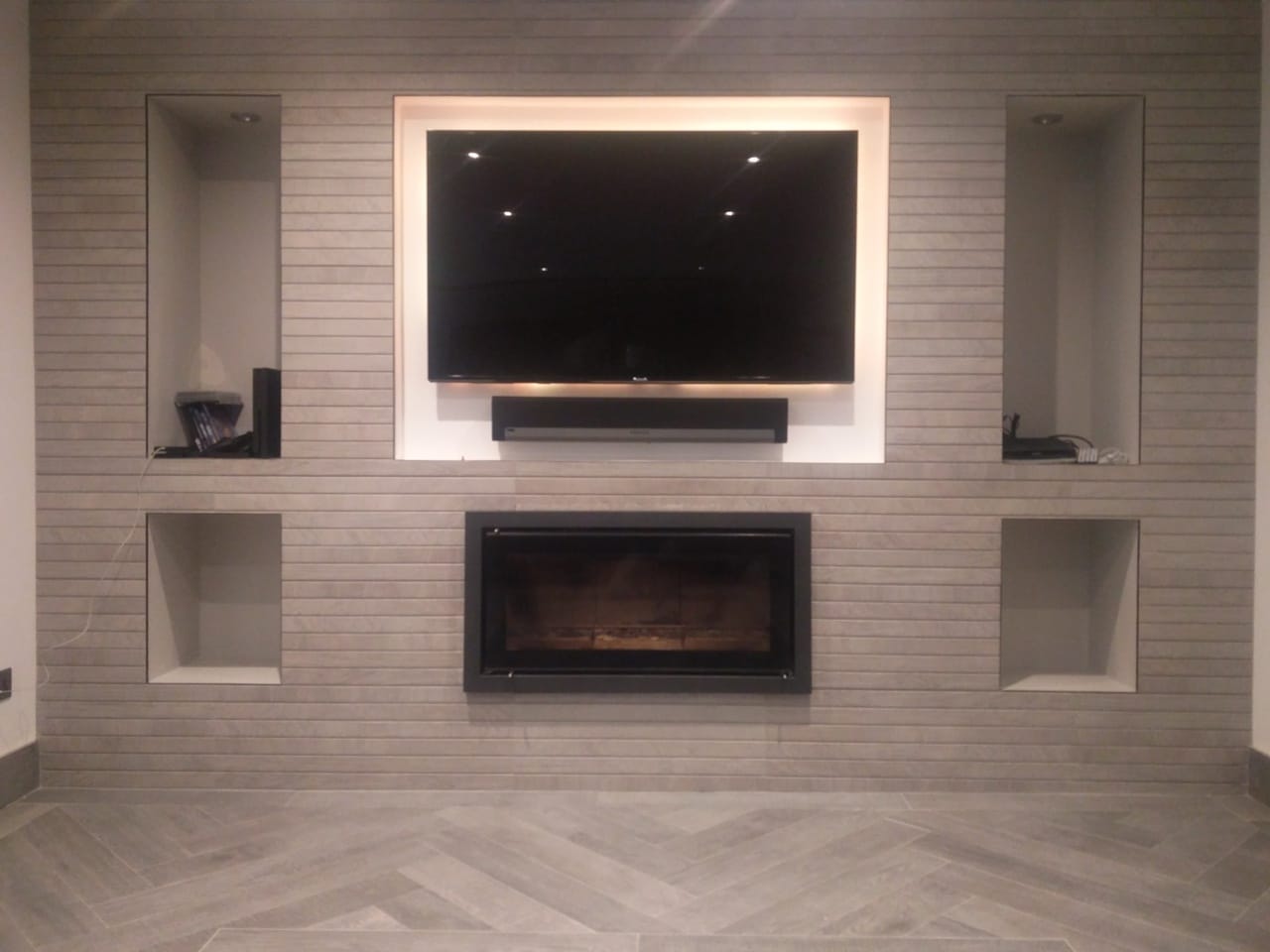
Designer-Led · Bespoke
A fireplace designed around your architecture, proportion, material and detail, rather than a stove dropped into whatever opening happens to be there. The design work you would expect from an interiors practice, delivered by the people fitting the stove.
20+ years installing across Windsor & Berkshire · HETAS 3869 · Written quote within 24–48 hours.
20+ yrs
Installing in Windsor & Berkshire
HETAS
Registered installers (3869)
£5m
Zurich Public Liability cover
12 mo
Workmanship guarantee minimum
24–48h
Fixed written quote turnaround
Overview
What it is
Bespoke fireplace design covers everything around the stove, the surround, the chamber lining, the hearth, the mantel and the wall reveal. We design each of these elements as one composition, in a material palette agreed with you, and coordinate the trades that build them.
Who it is for
Right for anyone renovating a period property in Windsor, Eton, Ascot or the Thames Valley villages, extending a modern home where the fireplace deserves the same design attention as the kitchen, or restoring a listed building where original detail matters.
When to book
Best specified as early as possible in a renovation, before plasterers, before decorators, ideally alongside kitchen and bathroom design. We are used to working directly with architects, interior designers and main contractors from RIBA Stage 2 onwards.
Why professional help matters
The stove is only ever a small part of what people see. The materials, proportions and detailing of the fireplace around it determine whether the room reads as considered or generic. Designer-led installation is what separates a good stove company from a good fireplace company.
If it's ignored
Catalogue MDF surrounds and stock hearths look exactly like what they are. Design-led installs use materials chosen for your specific room, and hold their look for decades.
A surround that is a fraction too tall, too narrow, or the wrong depth throws a whole room off. Design happens on paper: with measured drawings, before anything is cut.
Where the stonemason, plasterer, joiner and stove fitter are hired separately, the joins between their work are always visible. One coordinated team owns the whole outcome.
Our process
The same disciplined sequence on every project, whether it's a Georgian townhouse in Windsor or a new-build media wall in Ascot.
01
Chris visits your home to measure the chimney, hearth, room volume and ventilation. We inspect the flue, discuss aesthetics and confirm what is achievable in your specific property, from Georgian townhouses to sealed new-build breasts.
02
Every line item priced: stove, flue components, hearth, chamber works, building control. Potential extras (unforeseen chimney issues, structural adjustments) are itemised in advance so the number you sign off is the number you pay.
03
We refine the stove choice, materials, chamber finish and flue route with you. Deposit: cost of the stove plus 50% of installation, secures your slot within 72 hours of quote acceptance.
04
Dust sheets and protection go down first. Our HETAS-registered team completes the install to Building Regulations, cleans as we go, and treats your home like our own, no shortcuts, no mess left behind.
05
Smoke test, draw test, first light with you present, plus a full walk-through of controls, fuel and maintenance. HETAS certificate issued to you and your insurer. 12-month workmanship guarantee starts the day we leave.
The benefit
Six specific, measurable outcomes we deliver on every job. No vague marketing claims.
Every project starts with drawings, elevation, plan, section, so you sign off the composition before we build.
Slate, sandstone, honed granite, brick slip, polished plaster, oak, steel, chosen for the room, not the catalogue.
Stove fitter, mason, plasterer and joiner all under Chris's coordination: one point of contact, one accountable outcome.
We regularly deliver as part of larger renovation projects, proper drawings, proper specs, proper communication.
Sympathetic to Georgian, Victorian, Edwardian and Arts & Crafts details common across Windsor and Eton stock.
The design work does not stop at aesthetics, every fireplace is functional, HETAS or Gas Safe certified as appropriate.
Deep detail
The engineering, materials and decisions behind the finished job.
Chris visits the property, measures the space and the existing fireplace opening if any, discusses your reference images and the room's role in the house. Photos of the whole room, not just the fireplace, feed into the design.
We propose two to three design directions with material samples and simple elevation sketches. You choose the direction; we develop it into a specification and drawing set.
Structural preparation, chamber and hearth build, stove installation, plastering and finish are sequenced across a coordinated programme, typically 1–3 weeks on site depending on scope.
Snagging, cleaning, HETAS or Gas Safe certification and a live commissioning of the stove. Any decorating work by others is coordinated so the room hands over as one piece.
Recent installations
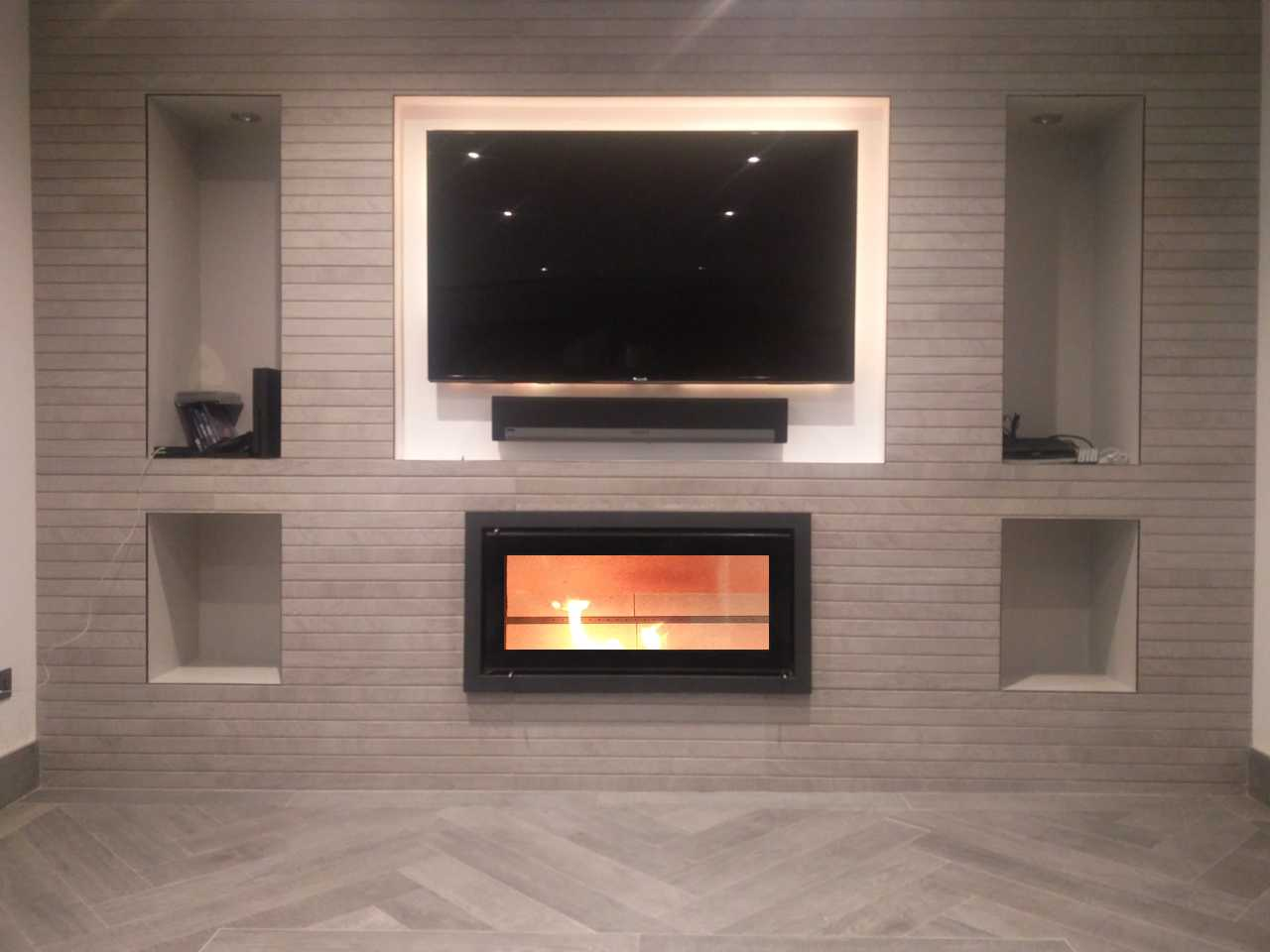
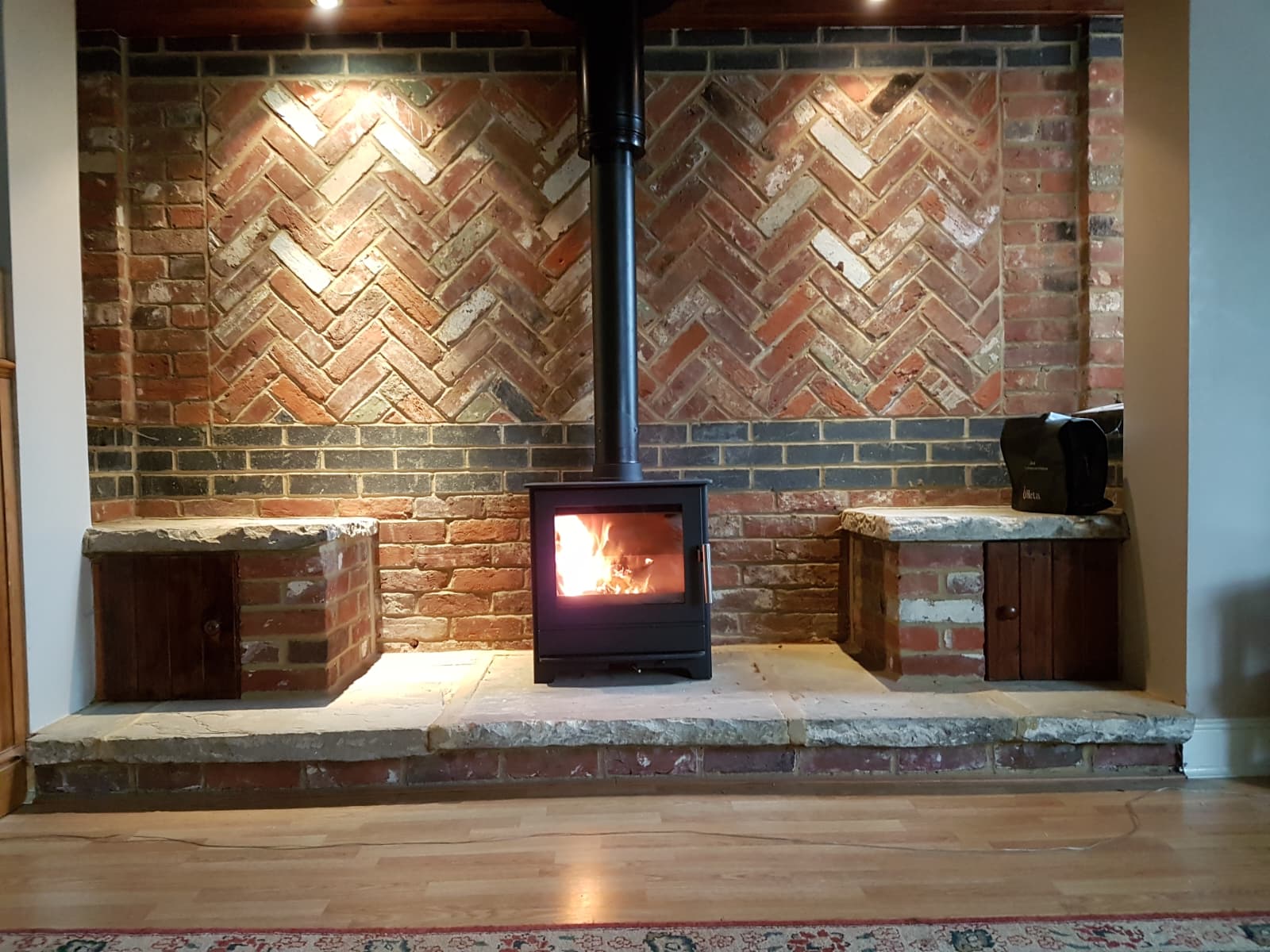
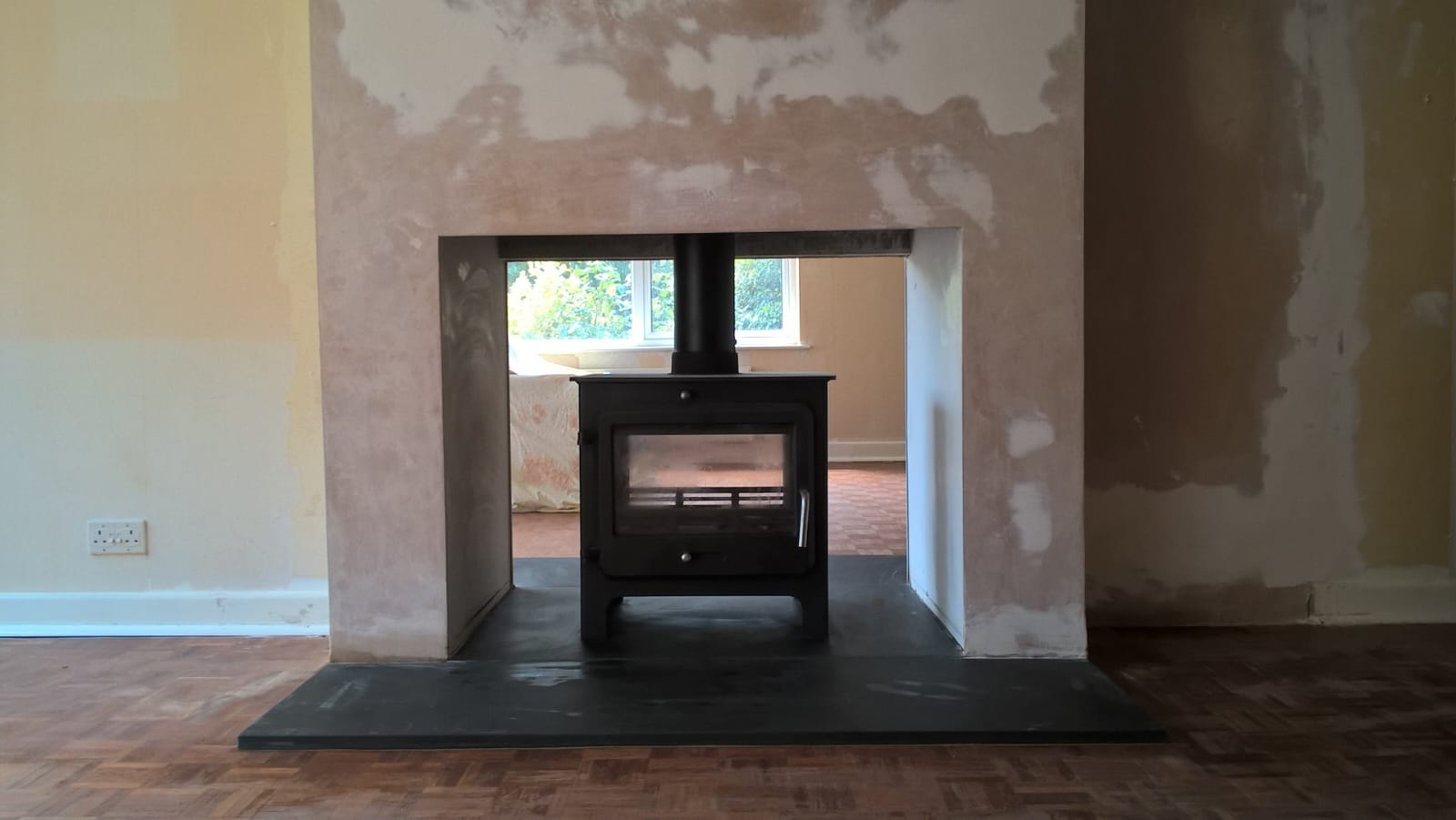
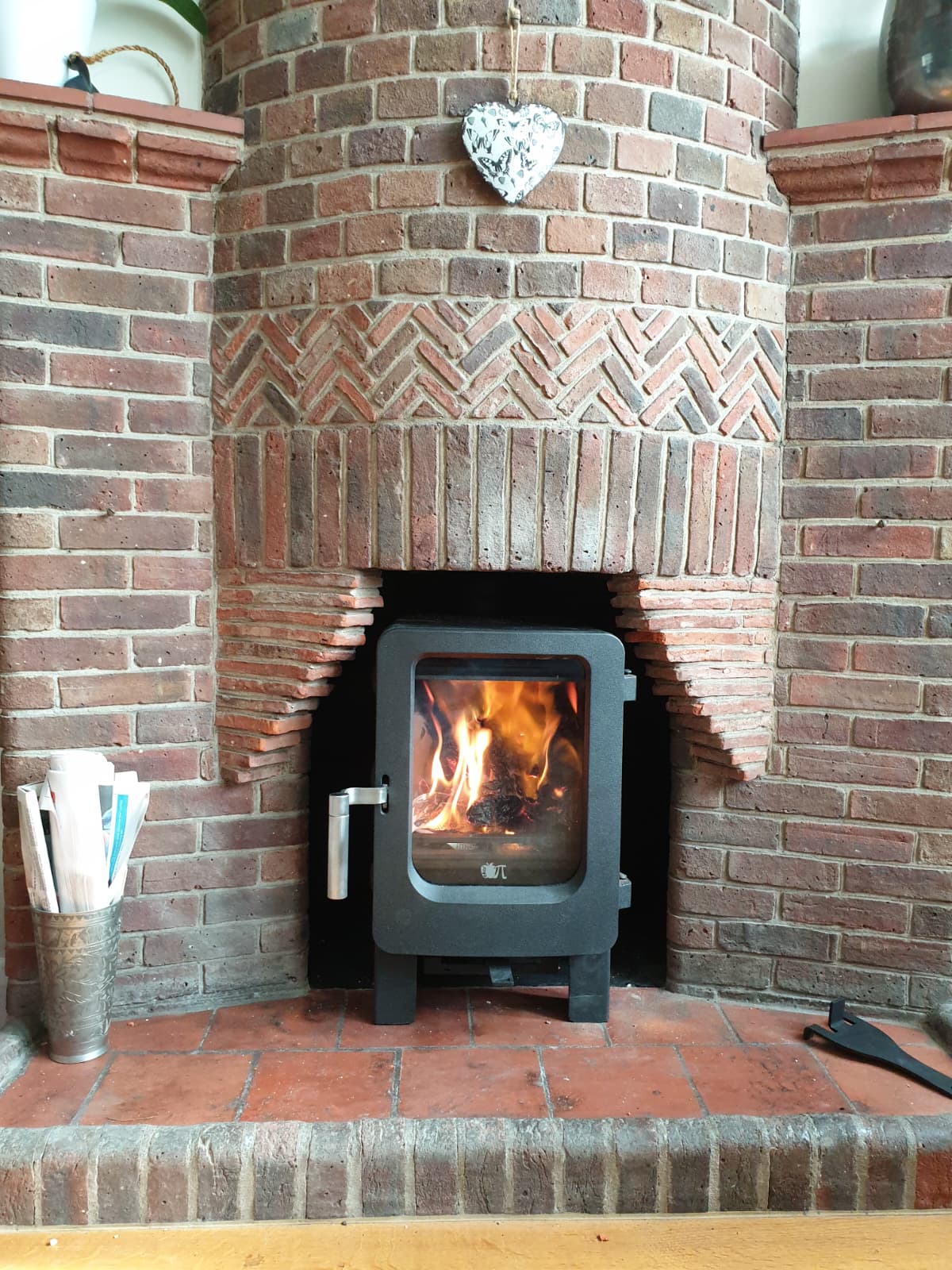
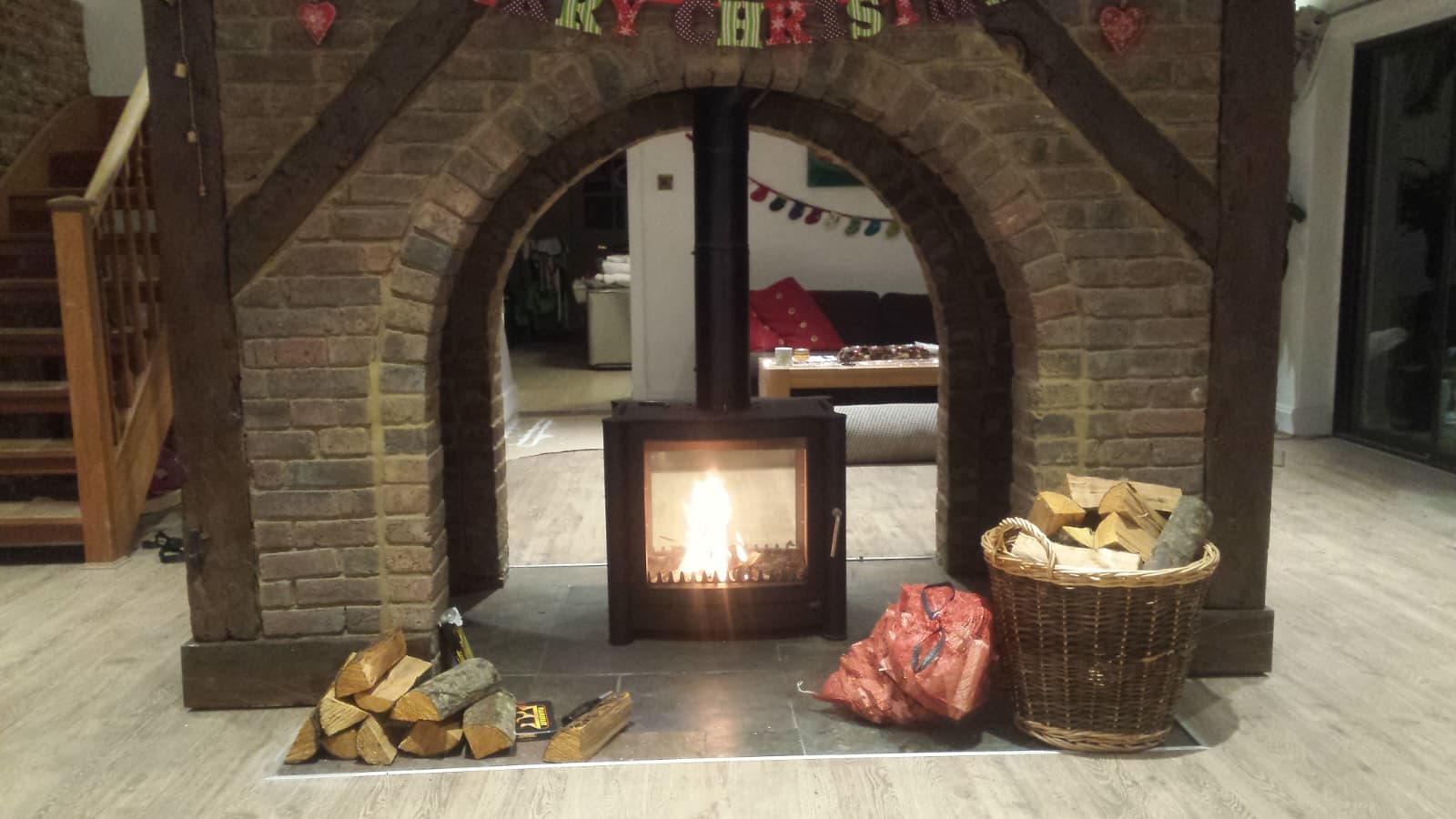
Every image below is a job we finished, no stock photography, no staged sets. Full portfolio on our work page.
Frequently asked
A designer-led fireplace project typically starts around £4,000–£6,000 for the fireplace elements (excluding the stove) and can extend significantly higher for premium materials or larger installations. Every project is quoted line-by-line after design consultation.
Yes: regularly. We are comfortable with measured drawings, RIBA stage-language and coordinated site meetings, and often deliver the fireplace element of larger renovation projects.
Yes: we work in materials and detailing appropriate to Georgian, Regency, Victorian, Edwardian and Arts & Crafts properties, all common across the Windsor and Eton area.
Concept to signed specification is typically 2–4 weeks. Site build is separately scheduled, usually within 6–10 weeks of specification sign-off during the busy season.
Yes: our showroom at Squires Garden Centre in Shepperton has working displays, and our portfolio includes projects across Windsor, Ascot and the Thames Valley.
Yes: we prepare and manage listed building consent and conservation-area planning applications where required, working alongside your architect or independently.
12-month workmanship guarantee on all installation and build work; manufacturer warranties on the stove (5-year to lifetime) and flue components (15–30 year).
In almost every case, yes, because we survey, size and quote the whole installation around a specific appliance. Buying the stove separately elsewhere routinely results in mismatched specification.
Related services
Areas we serve
Next step
Chris personally attends every survey, measures the chimney, discusses the design, and prices every line item transparently. No sales pressure. No extras on invoice day.